Why to-do lists fail
A to-do list is a set of intentions with no relationship to the finite resource that actually constrains you: hours in the day.
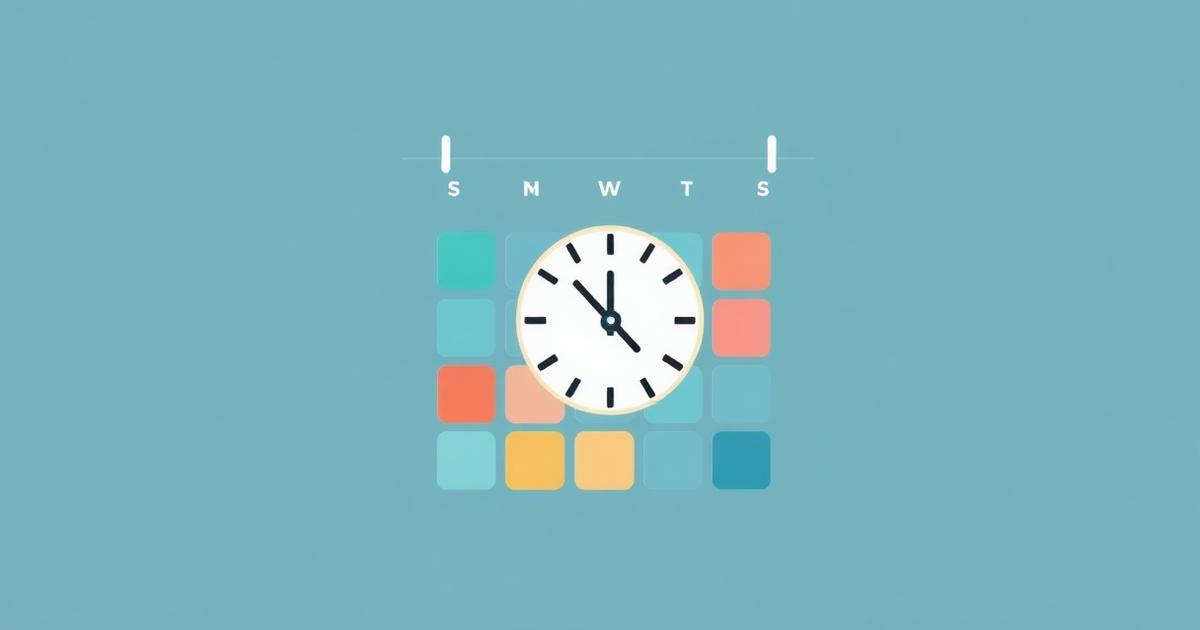
Lists grow without limit. Calendars do not, which is exactly why they are the better planning surface.
Timeboxing forces the trade-off up front
When every task must claim a slot on the calendar, over-commitment becomes visible before the day starts rather than at 6pm.
The discomfort of cutting something at 9am is much cheaper than the discomfort of failing at it all day.
Keep the boxes coarse
Thirty-minute granularity is enough for most knowledge work, and finer plans tend to collapse on first contact with reality.
Group similar work into one block rather than scattering it — context switching is the hidden tax on a fragmented calendar.
Leave a buffer
Leave at least 20% of the day unscheduled. The plan is a hypothesis, and the buffer is what lets it survive being wrong.
If the buffer goes unused, you have earned an early finish or a block of unplanned deep work.
- Timeboxing
- Deep work
- Planning
Frequently asked questions
- How long should a deep work block be?
- Ninety minutes suits most people: long enough to reach depth, short enough to protect from meetings and fatigue.
- What if the day derails?
- Re-box rather than abandon. Move the remaining blocks forward and drop the lowest-value one instead of reverting to a list.